Featured Engineering Project

MIMI

Smart Home AI Assistant

A personal smart home AI assistant designed to connect voice, vision, sensors, automation, and intelligent services into one integrated system running on an edge computing platform.

Raspberry Pi 5PythonEdge AIComputer VisionESP32MQTTIoTMagicMirror
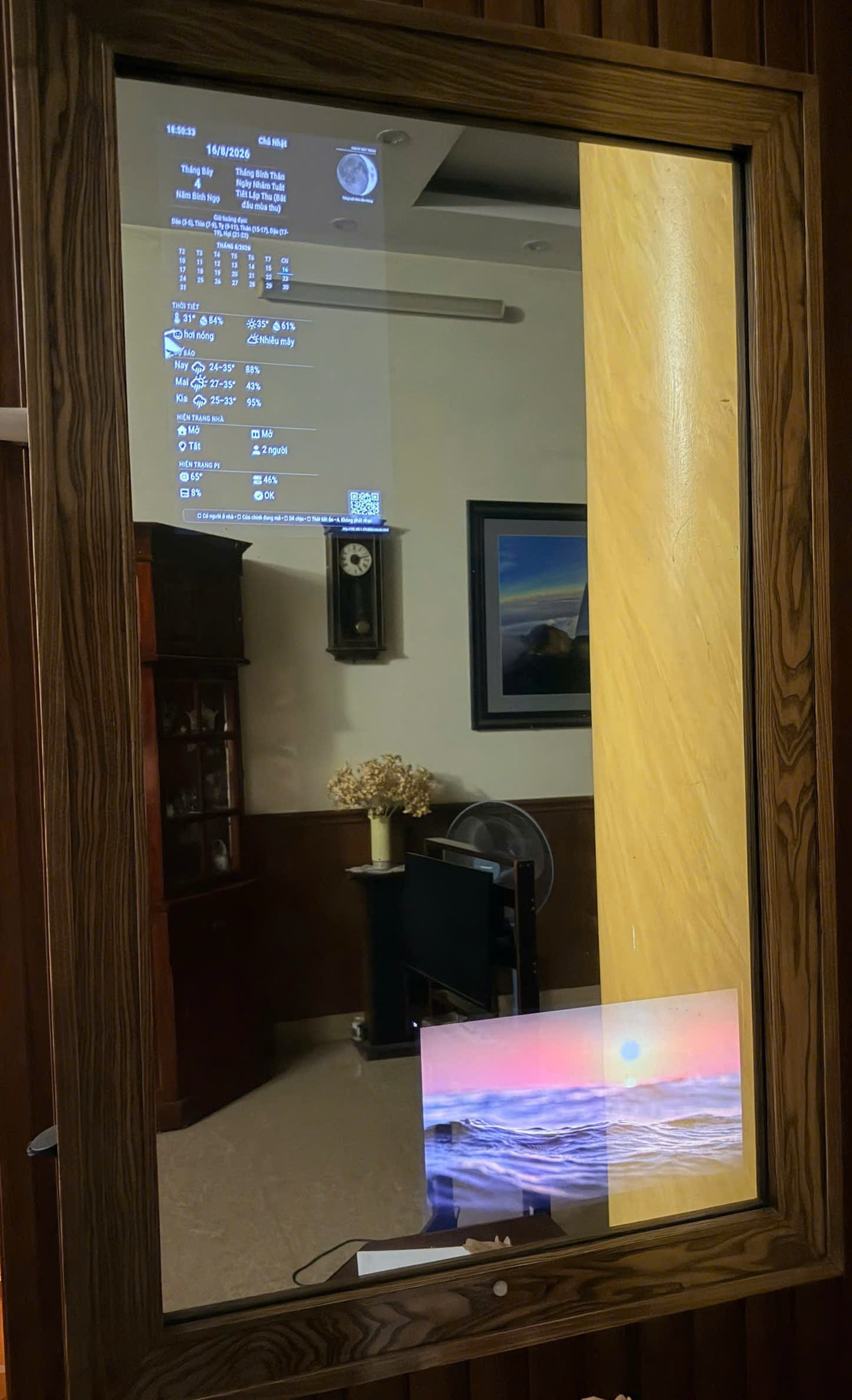
MIMI Smart Home AI Assistant

MIMI Prototype

Voice · AI · Sensors · Smart Home

Type

Personal Engineering Project

Status

Ongoing

Role

Creator & Developer

Focus

Embedded Systems & AI

01 · The Problem

Smart technology can still feel fragmented.

Modern homes often contain many separate smart devices, applications, sensors, and control systems. While each device may be useful individually, interacting with multiple interfaces can become inconvenient and difficult.

This problem becomes more significant for elderly users, children, or people who are less comfortable with digital interfaces. A useful home assistant should not require users to remember which application controls which device.

MIMI began from the idea that technology should adapt to people rather than forcing people to adapt to technology.
02 · The Idea

One natural interface for the home.

The goal was to build a home assistant that could interact with people naturally through voice while remaining connected to the physical environment through sensors, cameras, and smart devices.

Instead of creating a single-purpose gadget, MIMI gradually evolved into a modular platform that connects voice interaction, AI services, environmental sensing, computer vision, home automation, media, and a smart mirror interface.

03 · System Overview

A modular architecture across perception, intelligence, and interaction.

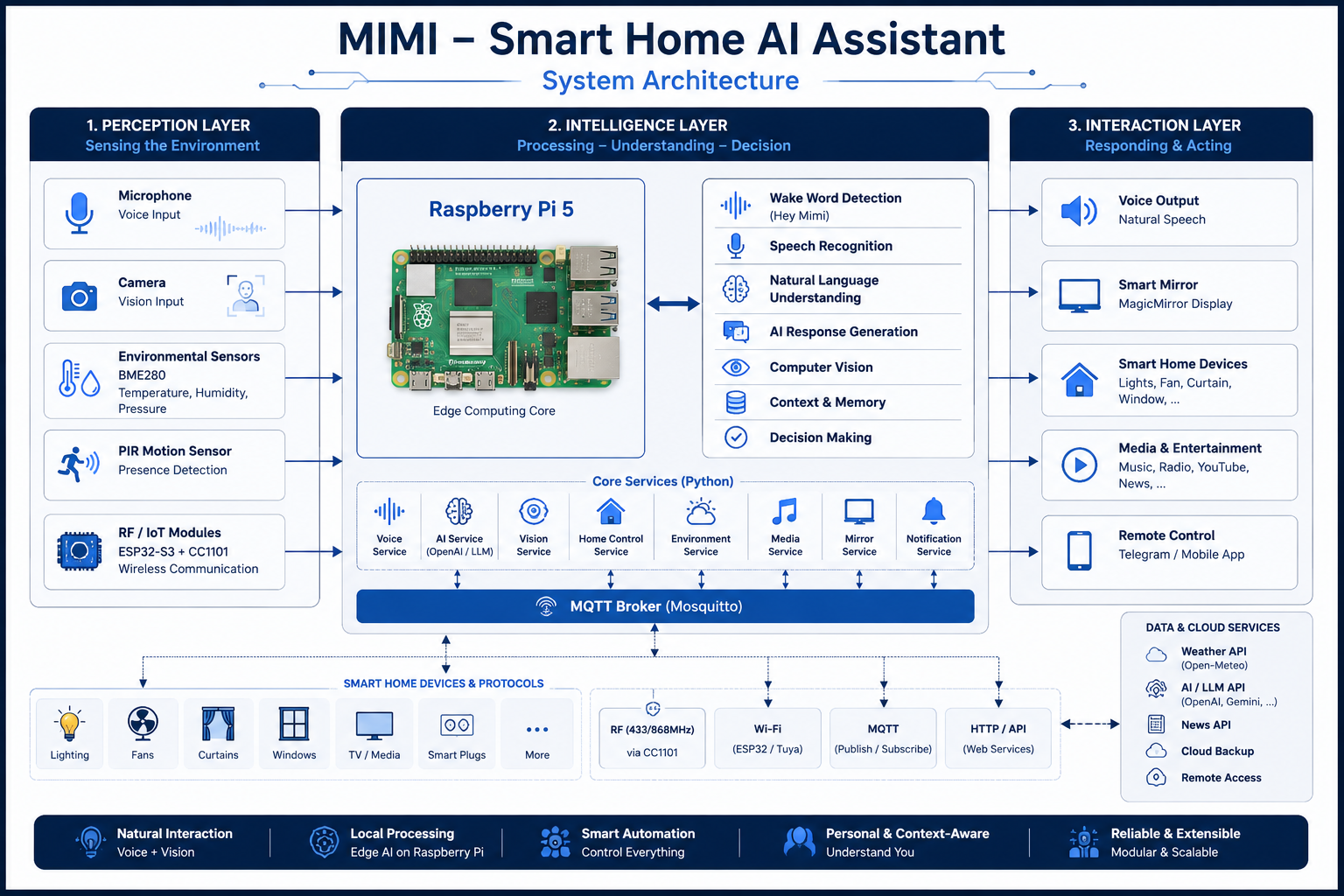
Perception Layer

  • Microphone
  • Camera
  • Environmental sensors
  • PIR motion detection

Intelligence Layer

  • Raspberry Pi 5
  • Python services
  • AI processing
  • Voice & vision logic

Interaction Layer

  • Voice responses
  • Smart mirror
  • Smart-home devices
  • Remote control
MIMI smart home AI assistant system architecture

MIMI system architecture — connecting perception, edge intelligence, communication services, and smart-home interaction.

04 · Hardware

From sensors to physical devices.

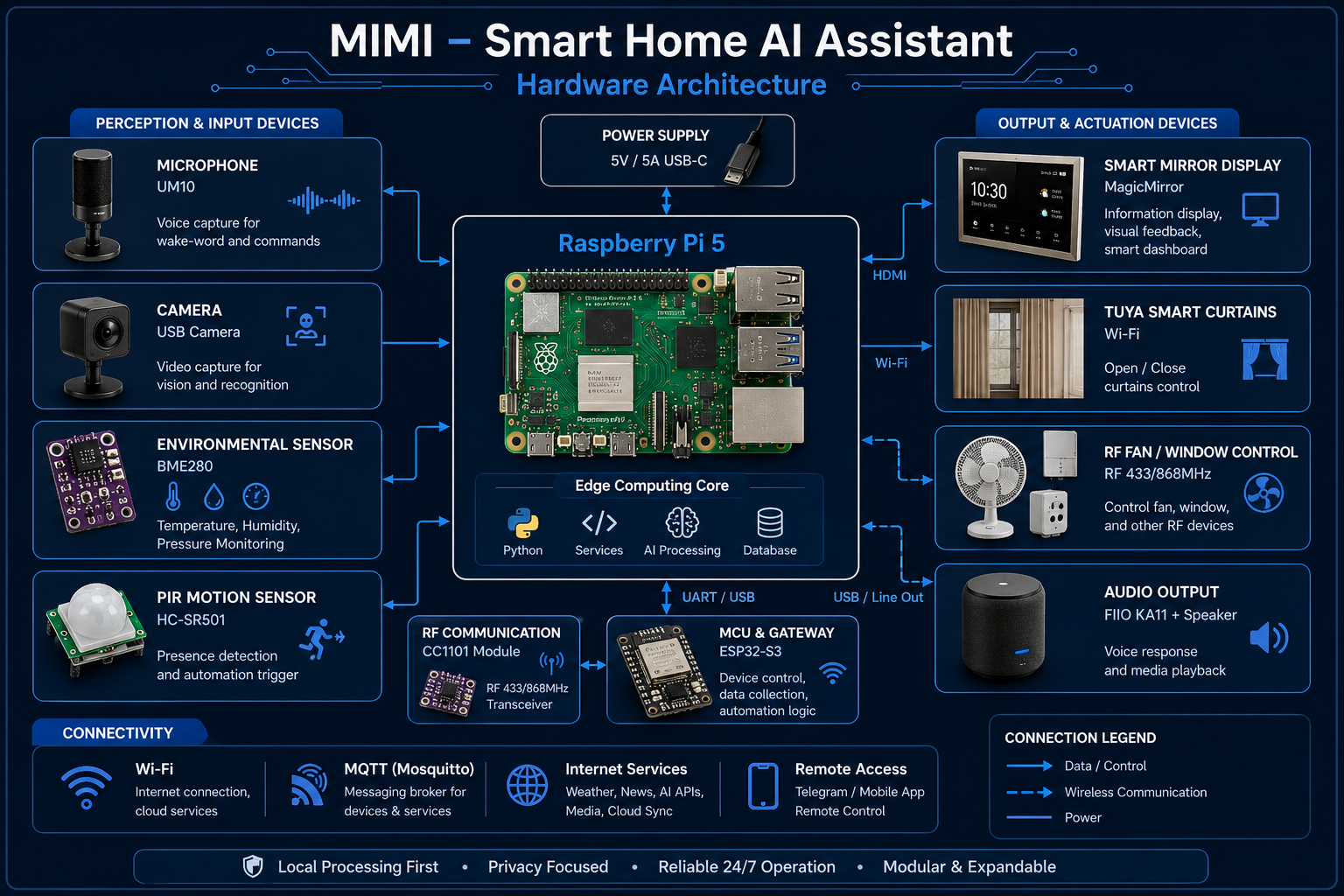
  • Raspberry Pi 5 as the main computing platform
  • Microphone and audio output system
  • Camera for visual interaction
  • Environmental sensors
  • PIR presence detection
  • ESP32-based devices
  • RF communication modules
  • Smart-home actuators and devices

05 · Software

Independent services working as one system.

  • Voice interaction services
  • AI processing and response generation
  • Computer vision modules
  • Smart-home control
  • Environmental monitoring
  • Media and information services
  • MagicMirror communication
  • MQTT-based device communication
MIMI hardware architecture

MIMI hardware architecture — Raspberry Pi 5, sensors, RF/IoT modules, audio, smart-home devices, and connectivity.

06 · Key Features

Designed for everyday interaction.

Natural voice interaction

Personalized household greetings

Indoor environmental monitoring

Weather information and forecasts

Smart-home device control

Music and media playback

News and information summaries

Computer vision interaction

Presence detection

Daily information reports

Smart mirror display

Remote interaction and control

07 · Engineering Challenges

Many problems only appeared in real-world use.

  • Reliable voice detection in a home environment
  • Integrating devices using different protocols
  • Managing limited edge-computing resources
  • Coordinating multiple Python services
  • Handling network and external-service failures
  • Maintaining stability during continuous operation

Engineering Decisions

Modular Architecture

Functions are separated into services so individual components can be improved without rebuilding the whole system.

Edge-First Approach

Processing and control are kept close to the Raspberry Pi where practical.

Real-World Testing

MIMI is tested in an actual household rather than only under controlled conditions.

08 · Testing & Iteration

Integrate → Test → Identify Problems → Improve → Test Again

The project has evolved through repeated cycles of testing and refinement. Voice sensitivity, device reliability, information display, media playback, sensor monitoring, and system stability have all been improved through practical use.

09 · What I Learned

Building a system changed how I think about engineering.

A complete engineering system requires more than making individual components work. Hardware, software, communication, reliability, resource limits, and user interaction must all work together.

MIMI taught me to break complex problems into modules, test assumptions through prototypes, diagnose failures systematically, and design for reliability rather than functionality alone.

10 · Social Impact

Making intelligent technology easier to access.

One of MIMI's long-term motivations is to explore how intelligent home technology can become more accessible to elderly users, children, and people who may find conventional digital interfaces difficult to use.

11 · What's Next

From prototype to a deeper engineering platform.

  • Improve local and edge AI capabilities
  • Increase voice interaction reliability
  • Develop stronger context awareness
  • Improve privacy and local processing
  • Expand smart-home integration
  • Increase system robustness and personalization